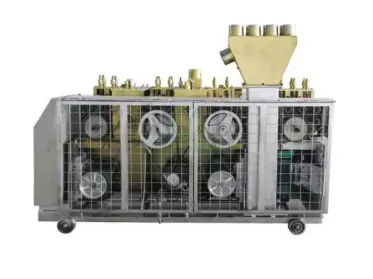

Top reasons how Edge Banding machines are the ultimate solution for woodworking Excellence
Creating something out of wood is a work of art one needs to have a proper understanding, ideas, and execution knowledge. Woodworking involves carving out items out of wood like cabinetry and furniture. It is the craft of carpentry and skills allied with fabricating things out of wood.
Edgebanding plays an essential role in woodworking as it smoothes the raw edges of wood that could be a serious problem in your end product.
What is Edgebanding?
Edgebanding is a thin material used to seal the exposed edges of the wood. Edgebanding is used in covering up plywood sides, matching a furniture’s finished look, and contributing to protecting the inner plywood from possibly wrapping.
Why is Edgebanding Important?
Edgebanding is an essential step involved in any kind of woodworking. It covers various significant factors that contribute to the flawless finishing of the item and elevates the standards of durability and build. Listing below few points of importance:
Keeps the wooden item moisture-free.
Escalates the level of longevity and strength of the wooden item
Smoothes the raw and sharp edges of the furniture
Functions of Edgebanding Machine
Edgebanding is a machine of high accuracy and efficiency. It adds clean and apt finishing to your wooden products. Edgebanding contributes to spotless finished products. Listing below few features of Edgebanding machine:
1) Trimming: Edgebanding machine holds the automatic tracking of the model and the high-frequency and high-speed motor fast cutting structure that ensures an apt smoothness and flatness of the cutting section.
2) Gluing and sealing: With the apt structure of the machine, it ensures more firm adhesive by uniformly gluing the double-sided edge sealing plate and edge sealing material.
3) Roughing/Finishing: The perfect smoothness of the upper and lower parts of the trimming plate is achieved with the help of the automatic tracking and high-frequency high-speed motor structure consolidated in the machine. It supports repairing and processing the surplus edge sealing materials above and below the edge sealing strip of the plate.
4) Profiling Tracking: The up and down rounding device of the machine contributes to making the plate and face smooth.
5) Edge Scraping: It helps in diminishing the ripple marks created by the cutting process of non-linear movement of trimming. It makes the upper and lower part of the plate smoother.
6) Polishing: It cleans the processed plate with the cotton polishing wheel to smooth the end face of edge sealing.
7) Slotting: The machine holds a function of slotting, which involves directly slotting the side plate and bottom plate of the wardrobe to reduce the process of the cutting saw, making it more convenient by reducing the time. It is also used in slotting the aluminum edge of the door panel.
Top 5 Edgebanding Machines
Edgebanding machines contribute by providing smooth wooden products with beautiful and artistic finishing and even edges. Listing below top 5 Edgebanding machines for wood, designed for simple, customized production and flexible solutions.
1) JADE 300 (Edge Trimming Machine)
JADE 300 is from the range of automatic single-sided edgebanding machines used for edge trimming. It is designed to improve and automate production and for industry sectors manufacturing made-to-measure products.
Features to highlight:
Design aligned to the specific production requirements
Outstanding performance
Focuses on details
Find it here: JADE 300 (Edge Trimming Machine)
2) AKRON 1300 (Hot Air Edge Banding Machine)
AKRON 1300 is a hot air edge banding machine from the single-sided range of edgebanding machines created with a vision of providing a machine with easy user experience, customized production, flexible solutions in a limited space.
Features to highlight:
High-quality finishing
User-friendly
Maximum working precision
Find it here: AKRON 1300 (Hot Air Edge Banding Machine)
3) STREAM A SMART
STREAM A SMART is an advanced range of automatic single-sided edgebanding machines. It is designed to elevate the user experience in terms of ease of use. STREAM A SMART customizes and manages the production aligning with the user’s needs and requirements.
Features to highlight:
Highly reliable for all the industrial machines
Elevated the quality of finishing
Full configurability for every customer request
Find it here: STREAM A SMART
4) STREAM C
STREAM C is the range of highly reliable and productive square and edgebanding machines. It supports both square and edgebanding operations to be carried out using a single system on both the transverse and longitudinal sides of a panel.
Features to highlight:
Perfect gluing surface
Excellent performance and execution of operation courtesy of specific solutions designed for preparing the panel for the subsequent machining phase
Units developed to meet all flexibility and productivity requirements
Find it here: STREAM C
5) STREAM B MDS
STREAM B MDS is the ideal flexible single-sided squaring and edgebanding machine designed for small batches that meets the need for total flexibility of medium to large companies. The machine is integrated into automatic production lines that support increased productivity, squareness, and finished panels of different shapes and sizes.
Features to highlight:
Minimizes factory floor footprint, costs and impact
Production efficiency due to automatic panel loading and unloading systems
High level of flexibility due to perfect management by line supervisor and barcode systems
Find it here: STREAM B MDS
Conclusion
Edgebanding machines are the ultimate solution for woodworking. They are created with a perspective of technology serving with the utmost ease and simplicity. They contribute to providing an innovative and user-friendly experience for artisan producers and companies. You can browse through Biesse to find an ideal Edgebanding machine that aligns with your business needs and requirements.
On Fractured Cutting Edges To Edge Tools – Part I
My thoughts are these. I am afraid we do tend toward living more obsessive lives thinking it’s this or that that makes us good craftsmen and women when in actuality most woodworkers we know don’t earn their living from the work they do in woodworking. This strange condition has created an equally strange dichotomy that then directly influences how we prioritise what we do to be woodworkers. If for instance we are 55 years old and retired with a half decent pension we might spend half a day sharpening a few chisels and know that there are no real consequences that affect other things and in those few hours we simply enjoy the freedom from the various constraints we once had to live with. On the other hand we might work two jobs, have a spouse and kids to be with during non-work time and want ensure everything is done to maximise efficiency. Our personal circumstances are all diversely different and so too then the criteria we set ourselves for working wood.
One thing I see is that somehow, often, we might find ourselves proving to the rest of society that we are not just, well, ordinary when ordinary is actually a good place to be for any artisan. It’s respectful and honest, open and transparent and modestly humble – hopefully anyway. When you meet a true craftsman it’s almost always very humbling to watch him at his work. You always feel as though you invaded his or her workspace, albeit unintentionally and quietly. Very different than with entertainment guru woodworkers. It’s really a very rare experience if and when it happens to us and we treasure the moments. I suppose my thought is that we should leave the super-manhood, super-womanhood to politicians and actors, one and the same often, and get on with what we feel called to do with our hands. Some people say, “Just do what your passionate about.” Well, that’s not really always too realistic and it’s not so easy in today’s culture because it takes more a made up mind, not passion alone. Being passionate can be one of the ingredients to driving an issue, but not the whole and it doesn’t often pay the bills. People who say follow your passion should possibly review the word and reconsider whether determination might be better, or convictions or dare I say it without sounding old fashioned, your calling or vocation. Being practical does fit too and that’s what being a craftsman is about much of the time; resolving different materials into creative pieces to wear, sit on, sit at, lay on, lift from, place on and even ride in and fly in or listen to. Of course the list is unending. Being a crafting artisan is more about honesty and integrity than being a business person or a smart alecky bod trying to sell something only to make money and building a bank account. We artisans, we’ve mastered our craft and in addition have speculatively invested much time and energy and finance in our making and now we must sell or starve. We stand in the freezing weather and conditions no employee would for hours and days to make our business work. We’re not born salesmen but we must sell what we make. We didn’t make a hotdog from a can or flip a burger and add mayo and mustard and a piece of lettuce, we made something with our hands we feel has real value. We’re not managers but we manage. We do these things without a contract of employment and with no job description mostly because no one else could, would or even should do it. Craft shows tend to have a large percentage of ‘here I am, entertain me between meals’ people. They’re not usually looking for furniture or a hand made violin but interested passersby. I say all of that because somehow we crafting artisans, whether arrived or on our way, have started to become increasingly more fanatical about sharpening and flattening our edge tools than actually mastering craft skills. Somehow it’s become something of a platform for performance and this leads me to what I want to try to help people see.
As I have said, we have become something of an obsessive bunch when it comes to the different elements of working wood; sharpness has become more and more obsessive. Now we are not talking about the violin maker seeking sharp levels for clear tone from the wood and who uses wood so soft, unsharp gouges and planes would bruise rather than cut the fine surfaces he strives to achieve. His standards parallel the levels needed for severing tissue by the surgeon’s hand, not the bench joiner chopping mortises and cutting a few dovetails.
It’s unfortunate that since the demise of ordinary craftsmanship we now turn to guru wood writers and not wood-wrights. Woodwrights are no longer there to give us our information of course. It’s true too that the sources of information become more and more questionable. Three recent sources of information teaching on sharpening techniques I tracked back to tool catalog and online sales people selling products for sharpening. Most of the information they have is not new but regurgitated. Each phase of sharpening change marks another saleable product and so we see Japanese water stones added to carborundum stones, Arkansas stones and Washita stones and then came diamonds and abrasive films, diamond paste and flattening stones. The list goes on.
We have survived the different gospels of scary sharp and micro-bevel methodology and are emerging to this very simple reality. As long as you start the cutting edge somewhere around 30-degrees and polish it out it will cut well. If you you sharpen to around 1200-grit it will cut most anything you need in woodworking. If you sharpen to a polished edge of around 15,000-grit you can slice the most delicate of materials effortlessly, but 98% of the time that’s far from necessary. What am I saying? I’m saying that we generally sharpen to task but often sharpen to a higher level because it’s not much extra effort. We all know after a few efforts at sharpening that the greatest effort comes at the start of the process when we have to regain ground to get through a fractured and dulled edge and back to a productive cutting edge. That said, it’s not a big deal, just a few extra strokes on the coarse diamonds gets you there. So, if that is the case, why do we sharpen to higher levels than are usually needed. Well, it is a fact that the more polished the two plains forming the arête for a cutting edge are, the sharper the edge is but the stronger the edge is too. As I said, the extra effort is worth the work because it’s so quick and effective. It’s not so much what we do to the edge to establish it but what we do to the edge after we have prepared it for work. Taking the chisel to the surface of the wood to work the wood begins an immediate process of edge reduction we now know is edge fracture but was once called wear. No matter the steel, edge fracture occurs at some level but some steels fracture more readily than others. What we often do not realise is that it is impossible to find a steel that both takes and retains an edge and at the same time has a level of durability we can rely on forever. All edges wear away by fracture and constantly need restoring. Not without getting into samurai sword making for ordinary work will find an edge retaining steel built to last more than a few hours. In the everyday of life, as a woodworker, we must understand that as soon as the chisel or plane is presented to the wood, edge fracture occurs to some degree. At first the edge fracture comprises usually small amounts of break out and breakdown. That is, in fractions of a second, within the first strokes and chops and pares in the wood, the edge we perfected has now been reduced. Surgery is no longer possible. But, in reality at the bench, we actually rely more on this edge-fractured edge to give us an actual working edge than we do or can the sharpest edge. The opening fracture is very small. Tiny. It is none biased in that it comes from the 30-degree corner we formed not the two facets as such. The facets are both strong and supported but not so the edge itself. The edges always fracture and guess what? It doesn’t really matter. In fact, in the imperfect world of sharpening we might want that to happen. In the imperfect world of sharpening we might even want the softer steels of O1. O1 has good edge retention, strength and durability rolled into one steel type. In the imperfect world of sharpening we can indeed rely on this one thing happening. Edge fracture does in fact give us the most practical working edge for most of our work. That said, continuing edge fracture results in a dull or what we used to call a ‘thick edge and we must constantly refresh the edge to continue our work. This week I did some tests on different steels old and new. It’s not at all scientific but the results did show that we do in fact compensate for edge fracture in the day to day of real work. Part II in this will be out tomorrow, to give you time to digest, so we can look at some of what we found.
Using The Home Depot’s Cutting Center
Welcome to citygirlmeetsfarmboy! I am so glad you are here and hope you find inspiration for your home while visiting. Make sure to follow me on instagram here for daily inspiration!
I absolutely love The Home Depot. I have shopped there for years, but was alway too nervous to ask them cut my wood for me. I was so insecure about my building skills that I felt I couldn’t risk the embarrassment because I didn’t know what I was doing anyway.
Paint Shopping
I needed some plywood ripped and knew I needed their help. Yes its funny, but here is my little journey of using The Home Depot Cutting Center.
I grabbed my keys and I forced myself into The Home Depot to try this wood cutting thing out.
I walked in nervously, but found an employee and quietly asked if they could help me. It was so easy, so smooth, and they were SO nice about it. I can’t believe it took me so long to use this service. Now, even though I can cut my own wood, I ask the help of The Home Depot. It helps me load things into my car easier, and gets my DIY’s going a bit faster.
That is when I decided to write a post about it. No need for anyone else to be nervous!
First Step
Before you get to The Home Depot you will want to have your measurements and plans ready. It is helpful to have a calculator and pen & pencil (or use your phone) with you. I usually need a few minutes alone with my brain to figure out all the math measurements to make sure I am getting it right.
Second Step
Funny right? But it really is the next step in this process, getting enough guts and bravery to walk in.
Third Step
Spend your time walking the isles and getting used to all the wood they offer. If you are following a tutorial it will have the type of wood you need. Ask any associate for help and they are super great about it.
I was shopping here for birch plywood to make shiplap. That final project is shared here. This is what the associate helped me find:
I calculated how much I would need. (My wall was 80 square feet and each board was 4 feet by 8 feet = 32 feet. So I grabbed 3 boards to be safe.)
Fourth Step
They have two different kinds of carts at The Home Depot. Normal shopping carts and metal ones with bars that allow you to prop your wood on without it falling out. Grab either one. The cutting center is in the back of the store and has a huge sign above it. You will also see large saws like the one in the following photo:
Fifth Step
Usually the employee in charge of cutting wood is back there. Sometimes there is even a line. If there is, just wait patiently – they are quick. If you do not see anyone, just wander the isles to find an employee and ask them to call for someone to come to the cutting center.
Sixth Step
So you don’t really have to smile (but it’s a nice gesture), but you do need to stand back. Tell them the measurements you need and they will start cutting it for you! Some stores have different rules on cutting. Most will do 12 cuts for free and then charge you a super small fee for additional cuts (.25 cents usually). Some stores will not make cuts under 6 inches for safety reasons. If you have any questions just ask them.
The plywood I was cutting was very thin, so the employee was able to cut all three boards at once for me. This limited my cuts and I was able to get them all done for no cost. The following machine is for super large cuts. They have an additional machine for cutting 2×4’s, 4×4’s, 2×10’s, etc and other sizes similar to that.
Seventh Step
They can help you load it back into your cart and you are ready for check out! Isn’t that worth the biggest smile you got?
Here is what my wood looked like:
Eight Step
Each board of wood has a scanner code sticker on the back. Since your wood is all cut up they will need to see the pieces that have the sticker on them. Let them know you had the wood cut and they will know what to look for. You can do the shelf check out if you wish, you will just need to find the scanner code yourself. Once your rung up, just pay your bill and you did it!
Ninth Step
Now all you have to do is load your wood into your car, and you are ready to get home and start DIYing! If you need help loading your wood, you leave it near the exit and drive your car back through the loading station. Someone will come help you. I am telling you, for customer service – this place has it down!
I was so excited to load my car (thanks to the darling older gentleman who walked by and helped me!) and get home to start working on my project.
2020 Update: Here is the wall I did after this visit to The Home Depot
If you have any questions or comments about The Home Depot Cutting Center, message us! If we don’t know the answer we can find it out. Let us know what you build!
Love, Kelly