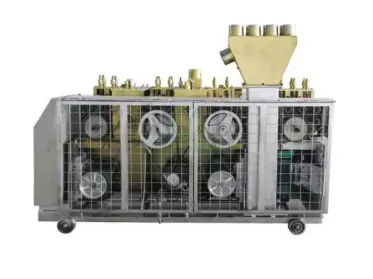

Chopsticks Introduction - Bamboo Processing Machine
Chopsticks are kitchen/eating utensils that are shaped pairs of equal-length sticks that have been used in East Asia for over two millennia. First invented and used in China, chopsticks later spread to countries that were tributary states of the Empire of China. In Southeast Asia, only Vietnam and ethnic Chinese communities consume all food with chopsticks. In Cambodia, Laos, Myanmar, and Indian and Malay communities in Singapore and Malaysia as well as in Nepal, chopsticks are generally used only to consume noodles. In Thailand, chopsticks have only recently started being used along with the spoon and fork.
Chopsticks are smoothed and frequently tapered and are commonly made of bamboo, plastic, wood, or stainless steel. They are less commonly made from titanium, gold, silver, porcelain, jade, or ivory. Chopsticks are held in the dominant hand, between the thumb and fingers, and used to pick up pieces of food.
The Han dynasty historian Sima Qian writes that chopsticks were known before the Shang dynasty (1766–1122 BCE) but there is no textual or archeological evidence to support this statement. The earliest evidence is six chopsticks, made of bronze, 26 cm (10 inches) long and 1.1 to 1.3 cm (0.43 to 0.51 inches) wide, excavated from the Ruins of Yin near Anyang (Henan) and dated roughly to 1200 BCE; those were supposed to be used for cooking.[18][19][20] The earliest known textual reference to the use of chopsticks comes from the Han Feizi, a philosophical text written by Han Fei (c. 280–233 BCE) in the 3rd century BCE.
The first chopsticks were used for cooking, stirring the fire, serving or seizing bits of food, and not as eating utensils. Chopsticks began to be used as eating utensils during the Han dynasty. Chopsticks were considered more lacquerware-friendly than other sharp eating utensils. It was not until the Ming dynasty that chopsticks came into normal use for both serving and eating. They then acquired the name kuaizi and the present shape.
To use chopsticks, the lower chopstick is stationary and rests at the base of the thumb, and between the ring finger and middle finger. The second chopstick is held like a pencil, using the tips of the thumb, index finger, and middle finger, and it is moved while eating, to pull food into the grasp of the chopsticks.[24] Chopsticks, when not in use, are placed either to the right or below one’s plate in a Chinese table setting. Some Chinese people feel that using serving chopsticks is more sanitary.[25]
Chopsticks Styles.
Chopsticks come in a wide variety of styles, with differences in geometry and material. Depending on the country and the region some chopstick styles are more common than others.
Length: Chopsticks are typically about 23 centimeters (9.1 in) tapering to one end. Very long, large chopsticks, usually about 30 or 40 centimeters (12 or 16 inches), are used for cooking, especially for deep frying foods.
Taper: Chopsticks are usually tapered in the end used for picking up food. Chinese chopsticks are more commonly blunt, while Japanese ones tend to be sharp and pointed in style. Korean chopsticks typically have sharp tapers, but with flatted grip.
Material: A large variety of materials is available, including bamboo, wood, plastic, metal, bone, jade, porcelain, and ivory.
Bamboo and wood chopsticks are relatively inexpensive, low in temperature conduction, and provide good grip for holding food. They can warp and deteriorate with continued use if they are of the unvarnished or unlacquered variety. Almost all cooking and disposable chopsticks are made of bamboo or wood. Disposable unlacquered chopsticks are used especially in restaurants. These often come as a piece of wood that is partially cut and must be split into two chopsticks by the user (serving as proof that they have not been previously used). In Japanese, these disposable implements are known as waribashi
Plastic chopsticks are relatively inexpensive, low in temperature conduction, and resistant to wear. Melamine is one of the more commonly used plastics for chopsticks. Plastic chopsticks are not as effective as wood and bamboo for picking up food, because they tend to be slippery. Also, plastic chopsticks cannot be used for cooking, since high temperatures may damage the chopsticks and produce toxic compounds.
Metal (commonly stainless steel) chopsticks are durable and easy to clean, but metal is slippery. Silver is still common among wealthy families, as are silver-tipped wooden or bone chopsticks. A common material for Korean chopsticks.
Other materials such as ivory, jade, gold, and silver are typically chosen for luxury. Silver-tipped chopsticks were often used as a precaution by wealthy people, as it was believed that the silver would turn black upon contact with the poison.
Embellishments: Wooden or bamboo chopsticks can be painted or lacquered for decoration and waterproofing. Metal chopsticks are sometimes roughened or scribed to make them less slippery. Higher-priced metal chopstick pairs are sometimes connected by a short chain at the untapered end to prevent their separation.
Environmental impact
Disposable chopsticks in a university cafeteria recycle bin in Japan.
The most widespread use of disposable chopsticks is in Japan, where around a total of 24 billion pairs are used each year, which is equivalent to almost 200 pairs per person yearly. In China, an estimated 45 billion pairs of disposable chopsticks are produced yearly. This adds up to 1.66 million cubic meters (59×106 cu ft) of timber or 25 million fully grown trees every year.
In April 2006, China imposed a 5% tax on disposable chopsticks to reduce waste of natural resources by overconsumption. This measure had the most effect in Japan as many of its disposable chopsticks are imported from China, which account for over 90% of the Japanese market.
American manufacturers have begun exporting American-made chopsticks to China, using sweet gum and poplar wood as these materials do not need to be artificially lightened with chemicals or bleach and have been seen as appealing to Chinese and other East Asian consumers.
The American-born Taiwanese singer Wang Leehom has publicly advocated the use of reusable chopsticks made from sustainable materials.[61][62] In Japan, reusable chopsticks are known as maharishi or Maebashi (マイ箸, meaning “my chopsticks”).
Company Profile
Romiter Machinery Co., Ltd. is a market-leading designer and a manufacturer of Bamboo Processing Machine. In the past 20 years, we focused on researching and designing the machinery which could process the bamboo into different bamboo products. All our machines equipped with reliable brand components.
Now, Romiter Group provides a complete Bamboo Processing Solution including Bamboo Toothpicks Production Line, Bamboo Chopsticks Production Line, Bamboo Incense Stick Production Line, Bamboo Clothespin Production Line, Bamboo Spoon Production Line, Bamboo BBQ Skewer Stick Production Line, Bamboo Toothbrush Production Line, Bamboo Fork Production Line and Bamboo Charcoal Production Line.
Share
Pin
Share
0
Shares
Wooden Chopsticks Making Machine
Features
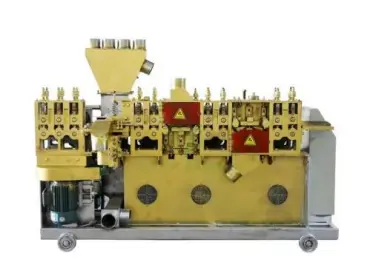
Wooden Chopsticks Making Machine is for making wooden disposable chopsticks. Normally the size of the finished chopsticks is length 19-24cm,width 1.2—1.3cm,and thickness 0.4—0.5cm.
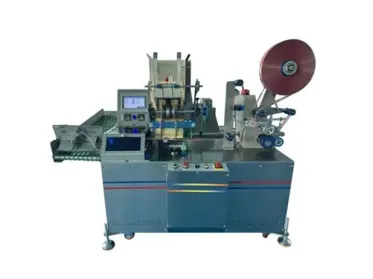
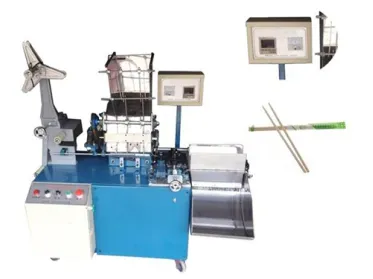
1.Above 5 units of wooden chopsticks machine is production line,Chopsticks heaging machine is for the picture (2)according to customer’s demands to buy.
2.Output: 40000pairs/8hours, need 3-4 workers.
3.If customer add another 2 more sets Chopsticks forming machine,the capacity is 120000 pairs/8hours.
4.Normally per cube meter timber can produce 50000pairs chopsticks for length 190mm.
5.Engery consumation:10℃/h,can contunue work for 12hours.
6.Usually this machine need 380v/50HZ,3 phases voltage in china.
Video
:Wooden Chopsticks Machine
If the voltage in your country is 220v/3 phases,then you can use a transformer to change the voltage.And we also can custom the voltage into 220v/3 phases.
Blog
Ice Cream Stick Selecting Machine-Gelgoog Ice Cream Stick Making
admin / 23 May, 2016admin /23 May, 2016
The machine can be used for quality control round ice cream sticks, tongue depressors, bamboo disposable chopsticks. A true machine installation up very long, back in front of each of the two hoppers, but generally not to install up to be. Workflow, from the left side and then feed feeding during transport will automatically be turned face cream bar. The first step after the delivery, is to detect whether there is material. The first red light is detected ice-cream bar thickness. The second red...
See More